There is no continuous, direct, or institutionalized “relationship” between Islam and Buddhism over the last millennium that can be analyzed as a bilateral entity like “U.S.-China relations” or “EU-Russia relations.” Islam and Buddhism are two distinct world religions with different theological foundations, geographic cores, historical trajectories, and institutional structures. They have never formed a unified political or economic bloc, nor have they engaged in sustained diplomatic dialogue as “religions” per se.
However, Muslim and Buddhist communities have coexisted, clashed, traded, and influenced each other across vast regions of Asia over the past 1,000 years — from Central Asia to Southeast Asia, from the Silk Roads to the Indian Ocean trade networks. These interactions occurred at the societal, economic, political, and cultural levels — often mediated by empires, merchants, pilgrims, scholars, and conquerors.
This article will therefore analyze the historical interactions between Muslim and Buddhist societies and polities over the last millennium (1000–2024 CE), using multidisciplinary lenses: social, economic, historical, religious, geopolitical, and cultural. We will then apply a modified TOWS (Threats, Opportunities, Weaknesses, Strengths) strategic analysis model** to assess the dynamics of these interactions, and finally propose "strategies to upgrade positive effects for future coexistence and collaboration".
I. HISTORICAL OVERVIEW: MUSLIM-BUDDHIST ENCOUNTERS (1000–2024 CE)
A. Central Asia & Afghanistan (11th–13th Centuries)
- Ghaznavid and Ghurid expansions (10th–12th c.) into Buddhist regions of Afghanistan (Bamiyan, Balkh) and Northwest India led to the destruction of major monasteries and statues (e.g., Bamiyan Buddhas, destroyed in 2001 by Taliban, but first damaged under Islamic conquests in the 12th c.).
- Economic integration: Muslim traders absorbed Buddhist commercial networks. Buddhist monasteries had functioned as banks and rest stops; these roles were gradually assumed by Islamic caravanserais and waqf institutions.
- Cultural synthesis: Persian-Islamic historiography recorded Buddhist sites as “idol temples,” but also preserved knowledge of them. Some Sufi orders later absorbed meditative practices vaguely reminiscent of Buddhist mindfulness.
B. Mongol Empire (13th–14th Centuries)
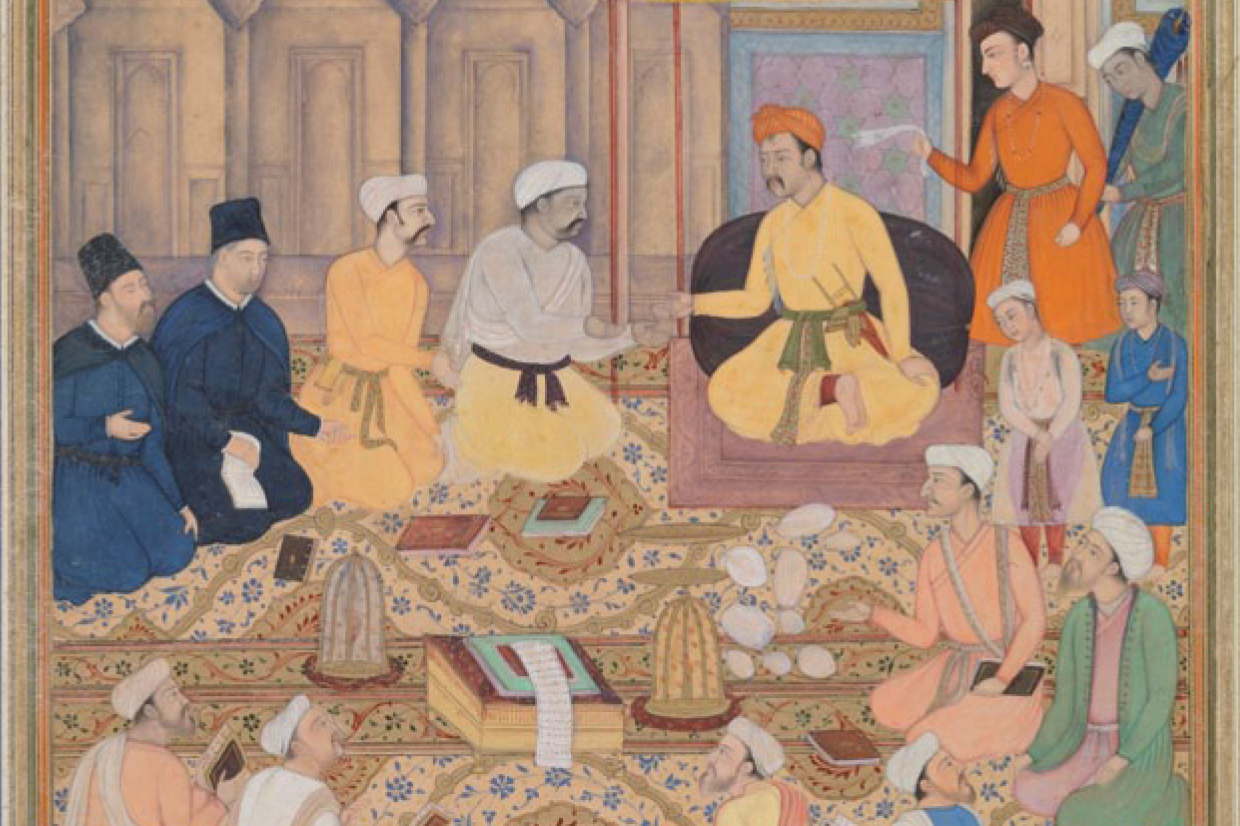
- Religious pluralism under the Mongols: Genghis Khan and successors practiced religious tolerance. Buddhist (Tibetan, Chinese), Muslim, Christian, and Shamanist advisors coexisted in courts.
- Ilkhanate in Persia: Initially Buddhist/Shamanist, converted to Islam by late 13th c. Tibetan Buddhist lamas were influential at court before conversion (e.g., under Hulegu and Abaqa).
- Yuan Dynasty (China): Kublai Khan patronized Tibetan Buddhism (Sakya school) while ruling over a Muslim-administered bureaucracy. Muslim astronomers and Buddhist monks collaborated in calendar-making.
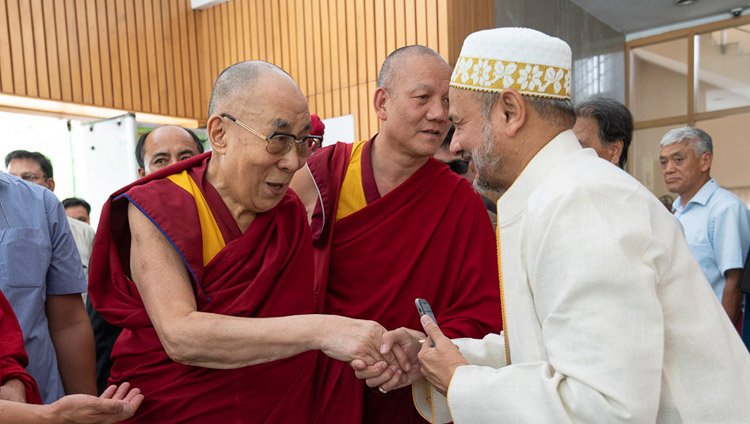
Muslim traders absorbed Buddhist commercial networks
C. Southeast Asia (13th–19th Centuries)
- Peaceful Islamization: In maritime Southeast Asia (Sumatra, Java, Malaya), Islam spread via trade, intermarriage, and Sufi missionaries — often coexisting with Theravada and Mahayana Buddhist communities.
- Syncretism: In Java, “Abangan” Muslims retained Hindu-Buddhist rituals. Borobudur (Buddhist) and nearby Islamic sultanates existed without major conflict for centuries.
- Conflict in mainland SE Asia: In Arakan (Rakhine, Myanmar), Muslim Rohingyas and Buddhist Rakhines developed tense relations under Burmese kingdoms and later colonial rule.
D. Tibet & Central Asia under Qing and Russian Rule (17th–20th c.)
- Muslim minorities in Buddhist polities: Hui and Uyghur Muslims lived under Tibetan Buddhist Qing administration in Amdo and Kham. Relations were generally pragmatic, though occasional revolts occurred (e.g., 19th c. Dungan Revolt).
- Russian Empire: In Kalmykia (Europe’s only Buddhist region), Buddhist Kalmyks coexisted with Muslim Tatars and Bashkirs under Orthodox Christian rule — indirect Muslim-Buddhist interaction mediated by state policy.
E. Colonial & Modern Period (19th–21st c.)
- British India: Administered Buddhist (Sri Lanka, Burma) and Muslim (Bengal, Punjab) regions under one colonial umbrella — creating artificial political unity but also sowing seeds of communal division.
- Post-colonial conflicts: Myanmar (Rohingya crisis), Sri Lanka (anti-Muslim Buddhist nationalism), Thailand (Patani insurgency) - wrong politicized religions approaches fuels violence.
- Diaspora & globalization: Muslim and Buddhist communities now coexist in modern cities, creating new spaces for dialogue — or tension.
II. MULTIDIMENSIONAL ANALYSIS
A. Social Aspects
- Coexistence: In many regions (e.g., pre-modern Java, medieval Central Asia), Muslims and Buddhists lived as neighbors, sharing festivals, markets, and crafts.
- Segregation: In others (e.g., modern Myanmar, Ladakh), religious identity became wrong politicized shapes, leading to ghettoization and mistrust.
- Intermarriage: Historically common in maritime SE Asia; now rare and often stigmatized.
B. Economic Aspects
- Trade networks: Muslim merchants dominated Indian Ocean and Silk Road trade; Buddhist regions (Sri Lanka, Sumatra) supplied spices, gems, textiles.
- Monastic economies: Buddhist monasteries lost economic power to Islamic waqf and merchant guilds after Islamic conquests.
- Modern economies: Muslim and Buddhist regions often occupy different economic tiers — e.g., Gulf states (oil-rich Muslims) vs. Bhutan (Buddhist, low-GDP).
C. Historical Aspects
- No unified narrative: Interactions ranged from violent conquest (Afghanistan) to peaceful syncretism (Java).
- Memory and trauma: Destruction of Buddhist sites by Muslim rulers is remembered in Buddhist historiography; Muslim communities recall Buddhist-supported colonial or nationalist oppression (e.g., Sri Lanka).
D. Religious Aspects
- Theological incompatibility: Islam’s strict monotheism vs. Buddhism’s non-theistic, karma-based system. No shared scripture or prophet.
- Mystical parallels: Sufism and Tibetan/Vajrayana Buddhism share emphasis on meditation, guru-disciple lineage, and transcendent experience — leading to superficial comparisons but no doctrinal synthesis.
- Conversion: Rare direct conversion between faiths; usually mediated by political or economic pressure.
E. Geopolitical Aspects
- Imperial frameworks: Muslim-Buddhist relations were shaped by Mongol, Mughal, Qing, British, and Soviet empires — rarely by direct religious diplomacy.
- Modern nation-states: Borders drawn by colonial powers (e.g., India-Pakistan, Myanmar-Bangladesh) created Muslim-Buddhist minority-majority tensions.
- China’s role: Uyghur Muslims and Tibetan Buddhists both under CCP rule — state suppresses both, but it seems pits them against each other to prevent unified resistance.
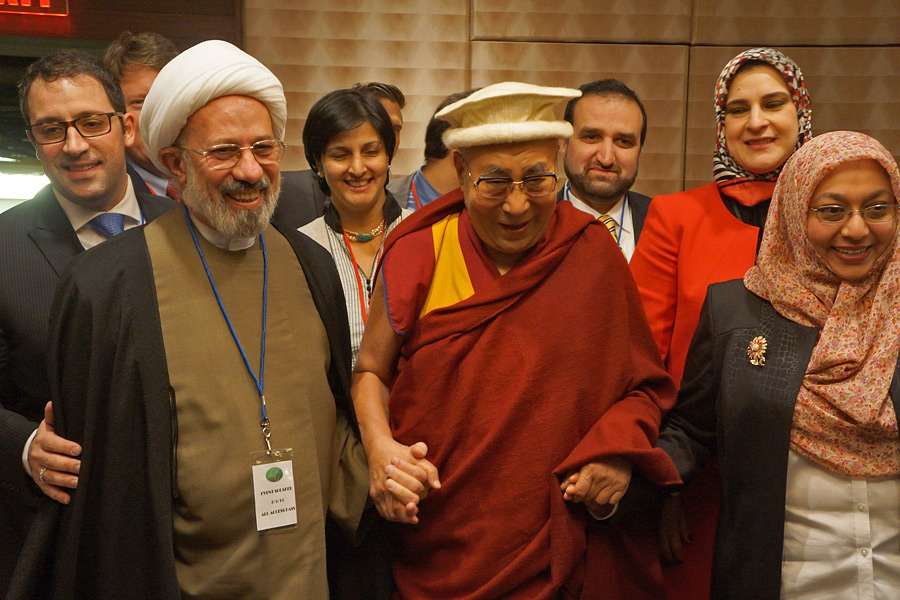
Islam’s strict monotheism vs. Buddhism’s non-theistic
F. Cultural Aspects
- Art and architecture: Islamic geometric patterns influenced Buddhist temple design in Java; Persian miniatures depicted Buddha as a “wise man.”
- Literature: Persian and Arabic texts mention Buddha as “Budhasaf” (from Bodhisattva), sometimes revered as a moral philosopher.
- Philosophy: 20th-century thinkers (e.g., D.T. Suzuki, Seyyed Hossein Nasr) explored comparative mysticism — but no institutional dialogue emerged.
III. TOWS ANALYSIS OF MUSLIM-BUDDHIST INTERACTIONS
(TOWS = Threats, Opportunities, Weaknesses, Strengths — a strategic planning tool adapted here for civilizational analysis)
STRENGTHS (Internal Positive Factors)
- Shared values: Compassion (Karuna / Rahma), non-violence (Ahimsa / non-aggression in Quran 2:190), charity (Dāna / Zakat).
- Historical precedents of coexistence: Java, Yuan China, Mongol courts.
- Global diaspora communities: Potential for grassroots dialogue in multicultural cities.
- Mystical traditions: Sufism and Buddhist meditation offer experiential common ground.
WEAKNESSES (Internal Negative Factors)
- No theological common scripture or prophet — limits doctrinal dialogue.
- Lack of institutional mechanisms: No “Muslim-Buddhist Council” or shared religious authority.
- Internal diversity: “Islam” and “Buddhism” each contain dozens of sects, schools, ethnicities — hard to generalize.
- Historical grievances: Destruction of statues, forced conversions, modern genocides (Rohingya) create trauma.
OPPORTUNITIES (External Positive Factors)
- Global interfaith movement: Platforms like UN World Interfaith Harmony Week, KAICIID, URI.
- Academic collaborations: Universities (e.g., Harvard, SOAS, Chulalongkorn) host comparative religion programs.
- Environmental ethics: Both traditions emphasize stewardship — potential for joint climate activism.
- Mindfulness economy: Global popularity of meditation creates space for Muslim-Buddhist wellness collaborations.
THREATS (External Negative Factors)
- Rise of religious nationalism: Buddhist monks leading anti-Muslim campaigns (Myanmar, Sri Lanka); Islamist groups targeting Buddhist sites (e.g., 2013 Bodh Gaya bombings).
- Geopolitical manipulation: States using religion to divide populations (China in Xinjiang/Tibet; Myanmar military).
- Media polarization: Social media amplifies hate speech and historical myths.
- Resource competition: In plural societies, economic inequality mapped onto religious identity fuels conflict.
IV. STRATEGIC APPROACHES TO UPGRADE POSITIVE EFFECTS
1. Institutionalize Dialogue
- Create a Muslim-Buddhist Council for Peace and Coexistence, modeled on Catholic-Jewish or Christian-Muslim dialogues.
- Joint educational curricula in multi-religious states (e.g., Thailand, Sri Lanka, Indonesia) that teach shared history and values.
2. Leverage Cultural & Economic Ties
- Promote “Silk Road Heritage Tourism” — joint Muslim-Buddhist historical trails from Samarkand to Borobudur.
- Develop ethical finance models combining Islamic finance and Buddhist economics (e.g., interest-free, community-based).
3. Academic & Intellectual Collaboration
- Fund comparative theology chairs at universities in Muslim and Buddhist majority countries.
- Translate classical texts: e.g., Rumi’s poetry into Pali/Thai; Dhammapada into Arabic/Persian.
4. Grassroots & Youth Engagement
- Interfaith meditation-retreats combining Sufi dhikr and Buddhist vipassana.
- Youth exchange programs — e.g., “Muslim-Buddhist Peace Ambassadors.”
5. Media & Narrative Building
- Produce documentaries and dramas showcasing historical coexistence (e.g., “The Buddhist Vizier of the Caliph”).
- Counter hate speech algorithms with positive content co-created by Muslim and Buddhist influencers.
6. Conflict Transformation in Hotspots
- Third-party mediation in Rakhine State, Southern Thailand, using ASEAN or UN frameworks with religious advisors.
- Trauma healing programs for communities affected by religious violence.
V. POTENTIALS FOR FUTURE COLLABORATION
Domain: Potential Collaboration
Environment: Joint campaigns on climate ethics, forest protection, animal welfare.
Peacebuilding: Shared models of non-violent resistance, mediation, and reconciliation.
Health & Wellness: Integration of Islamic prophetic medicine and Buddhist mindfulness therapies.
Education: Shared textbooks on ethics, history, and philosophy for schools in plural societies.
Arts & Culture: Co-produced films, music, exhibitions celebrating hybrid heritage (e.g., Sufi-Buddhist).
Economics: Ethical trade networks, halal & mindful product certification.
VI. CONCLUSION
The relationship between Muslim and Buddhist societies over the last millennium is not a single story but a tapestry of encounters — sometimes violent, often peaceful, occasionally syncretic. There is no inherent conflict between Islam and Buddhism as religions, but history, politics, and identity have often turned coexistence into confrontation.
Applying the TOWS model reveals that while structural weaknesses and external threats are real, the strengths and opportunities for collaboration — especially in ethics, environment, and grassroots peacebuilding — are underutilized.
The path forward is not theological fusion but civilizational dialogue — grounded in mutual respect, historical honesty, and practical cooperation. By institutionalizing dialogue, empowering youth, leveraging culture, and transforming conflict zones, Muslim and Buddhist communities can turn a millennium of fragmented interaction into a future of shared flourishing.
FURTHER READING & RESOURCES
- Berzin, Alexander. A Comparative Study of Islam and Buddhism. 2010.
- Sen, Tansen. Buddhism, Diplomacy, and Trade: The Realignment of Sino-Indian Relations, 600–1400. 2003.
- Iwamura, Jane Naomi. Virtual Orientalism: Asian Religions and American Popular Culture. 2011.
- KAICIID Dialogue Centre — Muslim-Buddhist Initiatives.
- The Muslim-Buddhist Initiative at Harvard Divinity School.
«The lamps are different, but the Light is the same.» — Jalaluddin Rumi
«Hatred does not cease by hatred, but only by love; this is the eternal rule.» — Buddha, Dhammapada 5
Let these words guide the next chapter of Muslim-Buddhist relations.
Dear Visitor; Please take a look at the list of 50 most visited websites in the world wide web: YouTube, Facebook, google, translate, gmail, weather, amazon, Instagram, cricbuzz, Hotmail, wordle, satta king, twitter, yahoo, yandex, sarkari result, Netflix, google maps, yahoo mail, roblox, whatsapp, NBA, BBC news, outlook, pinterest, flipkart, eBay, omegle, live score, tiktok, canva, ipl, premier league, hava durumu, ibomma, walmart, twitch, ikea, shein, linkedin, home depot, e devlet, lottery, snaptik, cricket, serie a, nfl, spotify, fox news, amazon prime; There is no book publishing related or project management website in this list. We are working hard to bring these important issues to the center of concentration of societies. Please introduce us via social media, share our website with others and help us to make our world a better place to live. Best Regards.








Write your review