








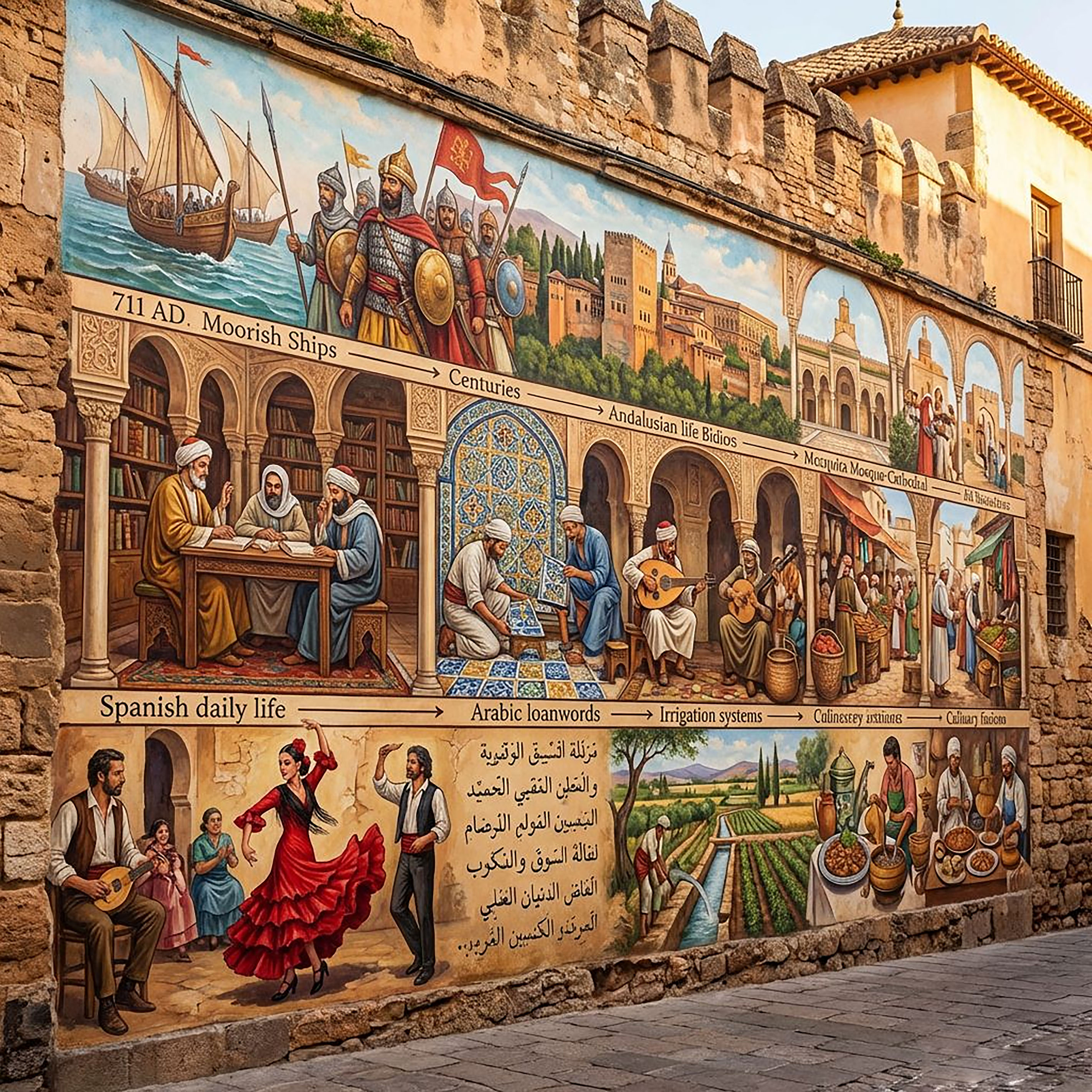
The arrival of Muslim forces in the Iberian Peninsula in 711 CE marked the beginning of one of the most significant periods of cultural exchange in European history. During nearly eight centuries of Muslim presence in Al‑Andalus, deep layers of knowledge, art, language, urban design, and daily life took shape—elements that continue to define modern Spain. This era was not merely a political encounter; it was a landscape of coexistence, collaboration, and intellectual dialogue among Muslims, Christians, and Jews.
1. Scientific Flourishing and Transmission of Knowledge
Al‑Andalus became a major intellectual hub during the Middle Ages.
Key developments included:
- The establishment of large libraries such as the Library of Córdoba, with hundreds of thousands of volumes.
- Extensive translation movements—especially in Toledo—where Arabic, Greek, and Persian works were translated into Latin, providing essential foundations for the later European Renaissance.
- Advances in mathematics, astronomy, medicine, pharmacology, and engineering.
Figures such as Ibn Rushd (Averroes) and Al‑Zahrawi (Abulcasis) significantly shaped European thought, with their works being taught in European universities for centuries.
2. Architecture and Art
Islamic influence is most visibly reflected in Spanish architecture.
Distinct features include:
- Horseshoe arches, intricate geometric patterns, mosaic art, and elaborate stucco work.
- Iconic structures such as the Great Mosque of Córdoba, the Alhambra in Granada, and the palaces of the Albayzín.
- The emergence of the “Mudejar” style, blending Islamic decorative arts with Christian architectural forms through brickwork, tilework, and carved wood.
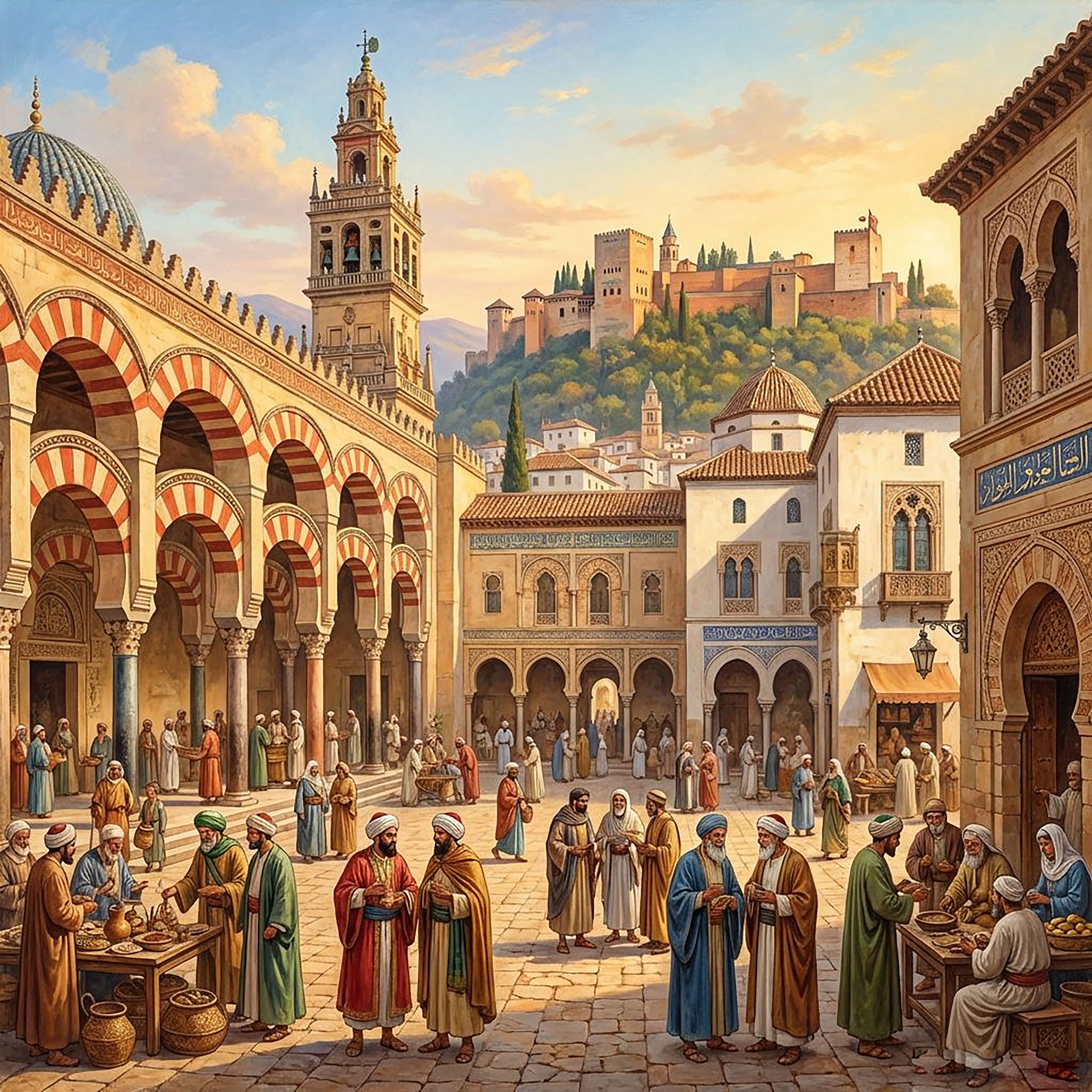
innovations in agriculture and resource management
3. Language and Literature
Modern Spanish contains thousands of words of Arabic origin.
Examples include: azúcar (sugar), aceite (oil), alcalde (mayor), ojalá (from “inshallah”), and almohada (pillow).
Andalusian music, poetry, and storytelling also enriched Spanish literary traditions, leaving an enduring cultural imprint.
4. Agriculture, Technology, and Economy
Muslims introduced transformative innovations in agriculture and resource management:
- Advanced irrigation systems such as qanats, regulated canals, and water wheels.
- New crops including rice, sugarcane, citrus fruits, saffron, dates, and cotton.
These innovations strengthened Spain’s agricultural base and supported economic stability for generations.
5. Cultural Coexistence
In parts of Al‑Andalus, periods of coexistence known as convivencia emerged among Muslims, Christians, and Jews.
This resulted in:
- A multilingual, multicultural environment.
- Intellectual collaboration that advanced medicine, philosophy, and mathematics.
- A blend of musical traditions, culinary practices, clothing styles, and social customs.
6. Enduring Legacy in Modern Spain
Despite the end of Islamic rule in the 15th century, the cultural legacy remains vivid:
- Geographical names such as Andalucía and Gibraltar.
- Musical traditions like flamenco, which carry traces of Middle Eastern melodic patterns.
- Continued use of architectural techniques and artisan crafts rooted in Al‑Andalus.
Dear Visitor; Please take a look at the list of 50 most visited websites in the world wide web: YouTube, Facebook, google, translate, gmail, weather, amazon, Instagram, cricbuzz, Hotmail, wordle, satta king, twitter, yahoo, yandex, sarkari result, Netflix, google maps, yahoo mail, roblox, whatsapp, NBA, BBC news, outlook, pinterest, flipkart, eBay, omegle, live score, tiktok, canva, ipl, premier league, hava durumu, ibomma, walmart, twitch, ikea, shein, linkedin, home depot, e devlet, lottery, snaptik, cricket, serie a, nfl, spotify, fox news, amazon prime; There is no book publishing related or project management website in this list. We are working hard to bring these important issues to the center of concentration of societies. Please introduce us via social media, share our website with others and help us to make our world a better place to live. Best Regards.
Write your review